
When businesses invest in seo services for small businesses, one of the first questions they ask is, “Why haven’t my rankings improved yet?“ It’s a fair question. After updating your website, publishing new content, or hiring an SEO expert, you naturally expect quick results.
The truth is that SEO is a long-term strategy. Search engines need time to discover, understand, evaluate, and rank your website before meaningful improvements appear. Whether you’re a local business in New Zealand or a growing company looking to reach more customers, understanding how SEO works will help you set realistic expectations and build long-lasting success.
At Weblumino LLP, we help businesses understand the SEO process while delivering strategies that create sustainable growth rather than temporary ranking spikes.
Why SEO Takes Time to Deliver Results
SEO is much more than adding keywords to a webpage. Google evaluates hundreds of ranking factors before deciding where your website should appear in search results.
Some of these factors include:
- Website quality
- Helpful content
- User experience
- Mobile responsiveness
- Page speed
- Backlinks
- Local relevance
- Website trust and authority
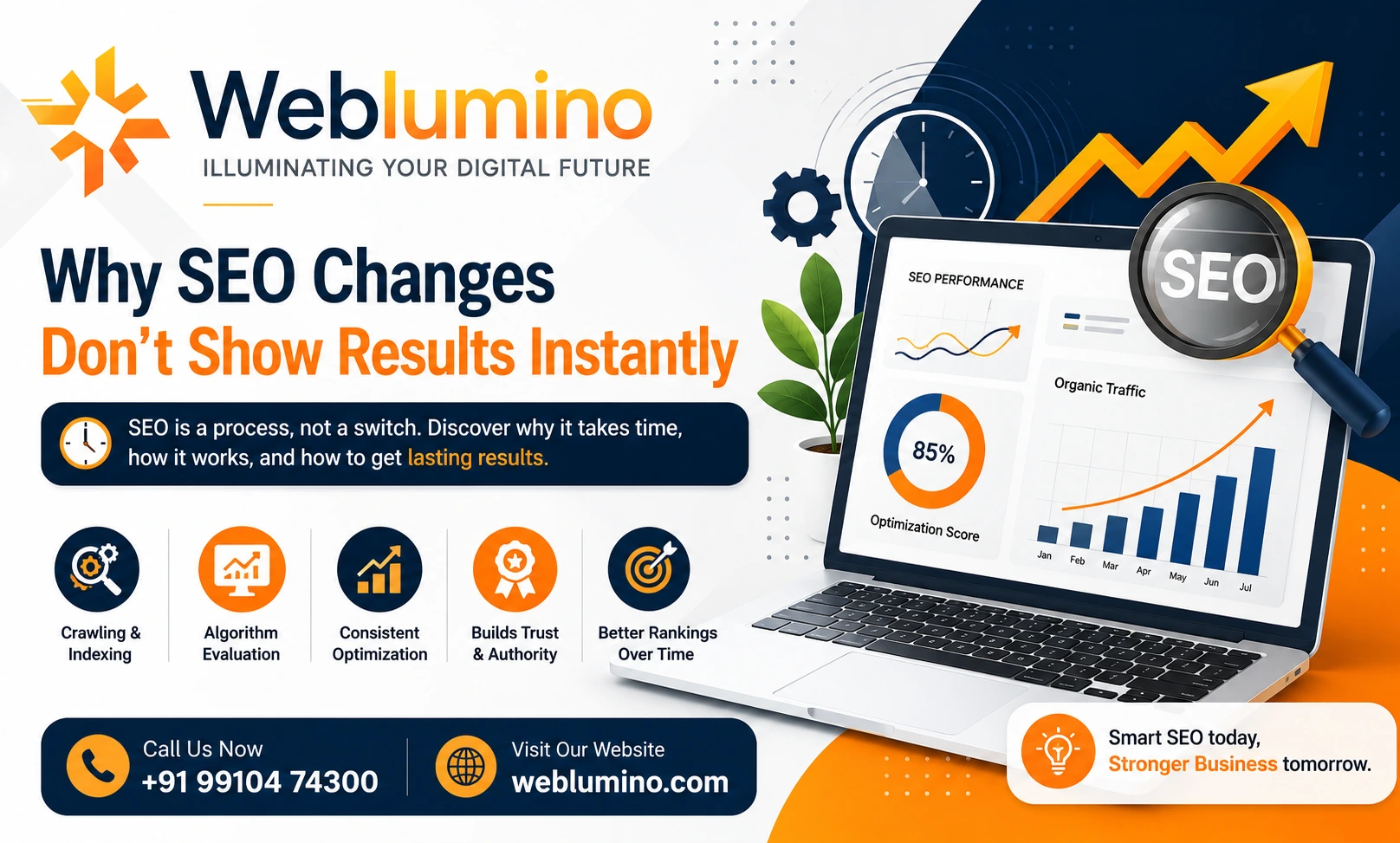
Each improvement sends positive signals to Google, but these signals need time to be processed.
Understanding Google’s Crawling Algorithm
One of the biggest reasons SEO doesn’t produce instant results is Google’s crawling algorithm.
Simply put, Google’s automated bots continuously visit websites across the internet. Their job is to:
- Discover new pages
- Read updated content
- Understand page structure
- Store information in Google’s index
- Decide where pages deserve to rank
Imagine updating your shop’s signboard. People driving past won’t notice it immediately if they haven’t passed your store yet. Google’s crawlers work in a similar way.
Some websites are crawled several times a day, while others may only be revisited every few days or weeks depending on:
- Website authority
- Content freshness
- Internal linking
- Crawl budget
- Frequency of updates
This is why publishing content today doesn’t mean you’ll rank tomorrow.
Indexing Comes Before Ranking
Many people confuse indexing with ranking.
Here’s the simple process:
Step 1: Crawling
Google discovers your updated page.
Step 2: Indexing
Google stores that page in its database.
Step 3: Evaluation
Google compares your content with thousands of similar pages.
Step 4: Ranking
Only after evaluation does Google determine your position in search results.
If your page hasn’t been indexed yet, it cannot rank.
Google’s Algorithm Needs Time to Trust Your Website
Google wants to provide users with accurate, reliable, and helpful information.
Whenever you:
- Update existing content
- Create new service pages
- Improve website speed
- Earn backlinks
- Optimize for local SEO
Google Answer Engine Optimisation gradually measures how users respond.
It looks at signals like:
- Click-through rate
- Bounce rate
- Time on page
- User engagement
- Content quality
These performance signals build over time, not overnight.
SEO Services for Small Businesses Focus on Long-Term Growth
Many business owners in New Zealand expect SEO to work like paid advertising.
Paid ads generate traffic immediately because you’re paying for placement.
SEO works differently.
Professional seo services for small businesses focus on building:
- Organic traffic
- Local visibility
- Brand authority
- Customer trust
- Sustainable rankings
While this takes longer, the results often last much longer than paid campaigns.
Why Local SEO Takes Time
If your business serves customers across Auckland, Wellington, Christchurch, Hamilton, or anywhere else in New Zealand, local SEO requires consistent optimisation.
A trusted Local SEO Company will improve areas like:
- Google Business Profile
- Local citations
- Customer reviews
- NAP consistency (Name, Address, Phone)
- Location-specific content
- Local backlinks
Google needs time to verify these signals before increasing your visibility in local search results.
Google Search Status Dashboard: Why It Matters
Sometimes, SEO changes appear delayed because the issue isn’t your website.
Google occasionally experiences indexing or crawling disruptions.
That’s where the Google Search Status Dashboard becomes useful.
This official dashboard reports:
- Crawling issues
- Indexing delays
- Search outages
- Serving problems
If Google reports an indexing delay, even perfectly optimized pages may take longer to appear in search results.
Checking the dashboard helps distinguish between a website issue and a temporary Google system issue.
Common Reasons SEO Results Take Longer
Your Website Is New
New websites have little authority.
Google needs time to understand whether your business is trustworthy.
High Competition
Keywords like seo services for small businesses often have strong competition.
Established websites have years of authority and backlinks.
Outranking them requires patience and consistent improvement.
Limited Content
Publishing one page rarely delivers significant results.
Successful websites regularly publish:
- Blogs
- Service pages
- FAQs
- Location pages
- Case studies
Fresh content encourages Google to crawl your website more frequently.
Weak Backlink Profile
Backlinks remain one of Google’s strongest ranking signals.
Quality links from trusted websites help increase your authority over time.
Technical SEO Issues
Problems like:
- Slow loading pages
- Broken links
- Duplicate content
- Poor mobile experience
can delay ranking improvements until they’re resolved.
How Long Does SEO Usually Take?
While every website is different, a general timeline looks like this:
| Time | Typical Progress |
| First Month | Website audit, keyword research, technical fixes |
| 2–3 Months | Pages indexed, early ranking improvements |
| 4–6 Months | Noticeable increase in organic traffic |
| 6–12 Months | Strong ranking growth and more leads |
| 12+ Months | Long-term authority and consistent visibility |
Businesses that consistently invest in SEO often see the strongest long-term returns.
How to Speed Up SEO Results
Although SEO can’t be rushed, you can improve progress by:
- Publishing helpful content regularly
- Improving website speed
- Updating old pages
- Building quality backlinks
- Optimizing internal linking
- Using structured data (Schema Markup)
- Encouraging genuine customer reviews
- Monitoring Google Search Console
These activities help Google understand your website more efficiently.
Voice Search Answer
Why don’t SEO changes show results immediately?
SEO changes take time because Google must crawl, index, evaluate, and compare your updated content before adjusting rankings. Website authority, competition, technical performance, and user engagement all influence how quickly results appear.
Why Businesses in New Zealand Should Stay Patient
Many New Zealand businesses stop SEO too early because they don’t see immediate results.
However, businesses that continue investing in quality SEO often experience:
- More qualified leads
- Better local visibility
- Lower long-term marketing costs
- Increased brand trust
- Higher conversion rates
Whether you’re targeting customers in Auckland, Wellington, Christchurch, Tauranga, or Dunedin, consistent SEO delivers lasting business growth.
Why Choose Weblumino LLP?
At Weblumino LLP, we understand that every business has different goals.
Our team creates customised seo services for small businesses that focus on:
- Technical SEO
- Local SEO optimisation
- Content marketing
- Keyword research
- Performance tracking
- Conversion-focused strategies
We don’t promise overnight rankings because sustainable SEO is built on consistent improvements that Google rewards over time.
Frequently Asked Questions
1. Why does SEO take so long to work?
Google must crawl, index, evaluate, and compare your content before changing rankings. This process naturally takes time.
2. How long before SEO starts showing results?
Most businesses notice improvements within 3 to 6 months, while stronger growth often occurs between 6 and 12 months.
3. Can a Local SEO Company speed up results?
A professional Local SEO Company can improve your website, fix technical issues, optimise local signals, and create quality content, helping you achieve better results faster than a DIY approach.
4. Does Google crawl every website daily?
No. High-authority websites are crawled more frequently, while smaller websites may be crawled less often.
5. What is the Google Search Status Dashboard?
It is Google’s official page that reports issues affecting Search, including crawling, indexing, and serving problems that may temporarily delay SEO results.
6. Is SEO better than paid advertising?
SEO builds long-term organic visibility, while paid advertising delivers immediate but temporary traffic. Many businesses benefit from using both together.
7. Why are my competitors ranking higher?
Competitors may have stronger backlinks, more helpful content, better technical SEO, or a longer online history.
8. Should I stop SEO if I don’t see quick results?
No. Consistent optimisation delivers stronger, more sustainable rankings over time. Stopping too early can slow your progress and allow competitors to stay ahead.
Start Building Long-Term SEO Success with Weblumino LLP
If you’re looking for reliable seo services for small businesses in New Zealand, Weblumino LLP is here to help. Our experienced team develops data-driven SEO strategies that improve visibility, attract qualified local customers, and generate sustainable growth. Instead of chasing quick wins, we focus on building lasting search performance that helps your business thrive in Google Search and AI-powered search experiences. Contact Weblumino LLP today to create an SEO strategy that delivers measurable results for the future.