
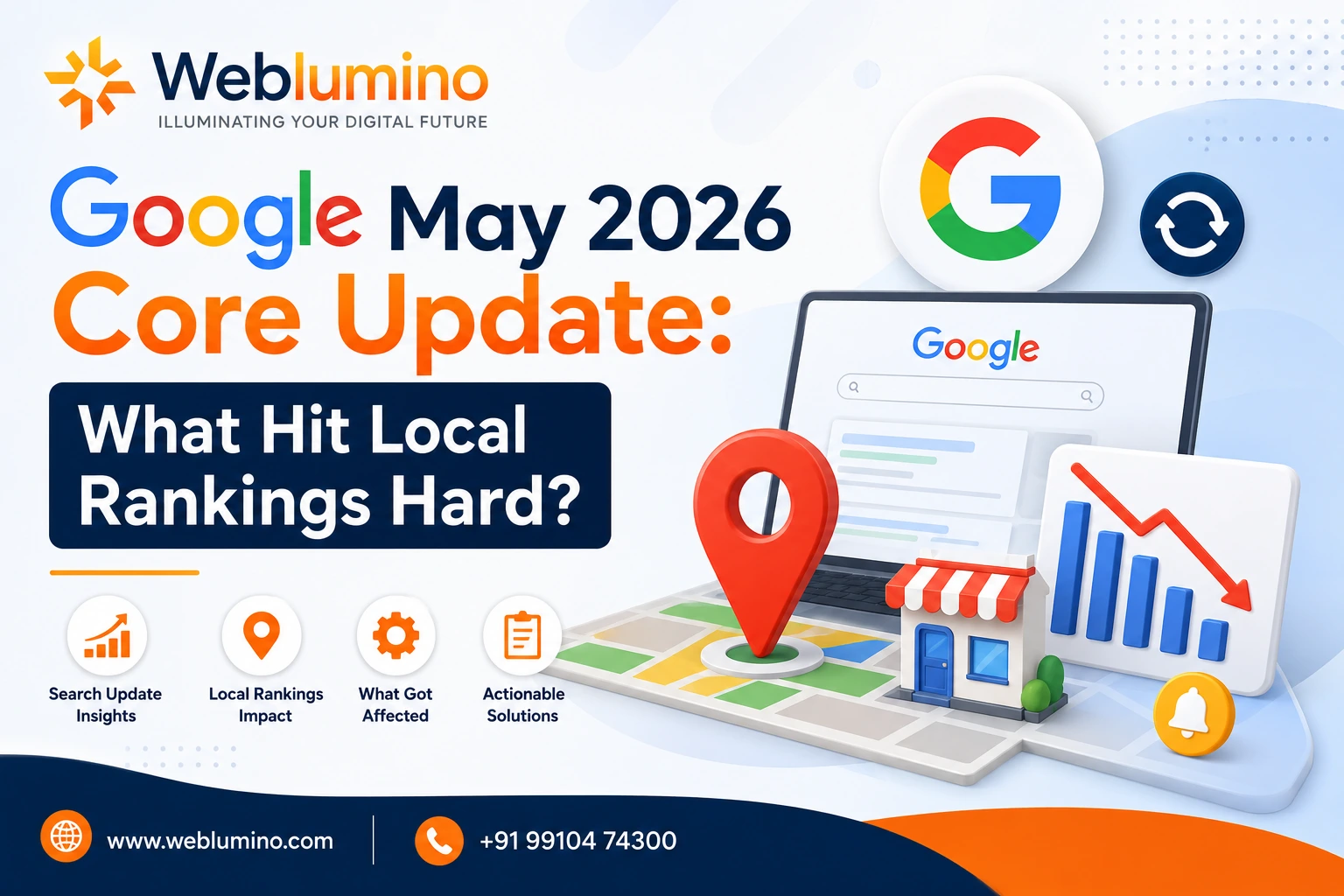
The Google May 2026 Core Update has once again reshaped the SEO landscape, especially for local businesses. If you’ve noticed sudden drops (or spikes) in your rankings, you’re not alone. This update focused heavily on content quality, user experience, and the trustworthiness of local signals.
At Weblumino LLP, we’ve analysed early trends and patterns to help businesses understand what changed and how to recover or grow stronger.
What is the Google May 2026 Core Update?
The Google May 2026 Core Update is part of Google’s ongoing effort to improve search quality. Unlike small algorithm tweaks, core updates significantly impact rankings by re-evaluating content across the web.
This update appears to prioritize:
- Real user value over keyword stuffing
- Accurate and updated business information
- Strong local SEO signals
- Website health (especially broken pages)
What Hit Local Rankings Hard?
Local businesses experienced noticeable ranking fluctuations due to several key factors:
1. Weak Content Relevance
Many local websites lost rankings because their content lacked depth or didn’t match user intent. Pages created just for ranking (not for users) were hit the hardest.
2. Poor Google Business Profile Optimisation
Incomplete or outdated business listings affected visibility in local packs.
3. Broken Pages & Technical Issues
One of the most overlooked yet critical factors in this update is broken pages.
Broken Pages: A Hidden SEO Killer
Broken pages (404 errors or inaccessible URLs) send a negative signal to search engines. With the Google May 2026 Core Update, Google is now stricter about website health.
Why Broken Pages Matter:
- They create poor user experience
- Increase bounce rate
- Waste crawl budget
- Reduce trust signals
Common Causes:
- Deleted pages without redirects
- Incorrect internal links
- Sitemap errors
- Server issues
Quick Fix Steps:
- Use Google Search Console to identify errors
- Redirect broken URLs to relevant pages
- Update internal linking structure
- Regularly audit your website
Key Ranking Factors After the Update
| Ranking Factor | Impact Level | What to Do |
| Content Quality | High | Write helpful, user-focused content |
| Local Signals | High | Optimize Google Business Profile |
| Website Health | High | Fix broken pages and improve loading speed |
| Backlink Quality | Medium | Focus on relevant, natural links |
| Mobile Experience | High | Ensure responsive and fast mobile design |
| User Engagement | Medium | Improve readability and navigation |
Benefits of Adapting to This Update
If you align your strategy with the Google May 2026 Core Update, you can gain a strong competitive advantage.
Key Benefits:
- Higher local visibility
- Better user engagement
- Increased website traffic
- Improved conversion rates
- Long-term SEO stability
Step-by-Step Strategy to Recover Rankings
Step 1: Audit Your Website
Check for:
- Broken links
- Thin content
- Duplicate pages
Step 2: Improve Content Quality
Focus on:
- User intent
- Clear structure
- Updated information
Step 3: Resolve Website Technical Issues
- Resolve 404 errors
- Improve page speed
- Optimize mobile performance
Step 4: Improve Your Local Business Reach
- Update your Google Business Profile
- Add location-based keywords
- Collect genuine reviews
Step 5: Create Powerful Trust Signals for SEO
- Add author details
- Show testimonials
- Maintain consistent NAP (Name, Address, Phone)
Pro Tips from Weblumino LLP
- Avoid over-optimisation write naturally
- Keep your website updated regularly
- Monitor analytics after the update
- Focus on long-term SEO, not quick hacks
10 SEO-Friendly FAQs
1. What is the Google May 2026 Core Update?
The Google May 2026 Core Update is a major algorithm change designed to improve search result quality. It evaluates content, user experience, and trust signals more strictly than before.
2. Why did my local rankings drop suddenly?
Your rankings may have dropped due to weak content, broken pages, poor local SEO Ranking signals, or outdated website information.
3. How do broken pages affect SEO?
Broken pages harm user experience and prevent search engines from properly crawling your site, leading to lower rankings.
4. How can I fix broken pages quickly?
You can fix them by identifying errors in Google Search Console and setting up proper redirects or updating links.
5. Is content still important after this update?
Yes, content is more important than ever. Google now prioritizes helpful, user-focused, and original content.
6. How does this update affect small businesses?
Small businesses can benefit if they focus on quality content, accurate business listings, and a strong local presence.
7. What role does Google Business Profile play?
It plays a major role in local rankings. An optimized profile improves visibility in local search results.
8. How often should I audit my website?
You should audit your website at least once a month to identify technical issues and content gaps.
9. Can backlinks still improve rankings?
Yes, but only high-quality and relevant backlinks matter. Spammy links can harm your rankings.
10. How long does recovery take after a core update?
Recovery can take weeks or even months, depending on how quickly and effectively you implement improvements.
Final Thoughts
Following Google’s update to Core Algorithm in May of 2022 has continued with Google’s emphasis on providing users with a better experience, quality content, and using a sound technical approach. Companies who move quickly through this transition will continue their recovery in positions within search engines, as well as likely being further ahead than other companies.
Weblumino LLP encourages companies to have a long-term strategy in regards to search engine optimization, fix any technical problems with their website (e.g. broken pages), and ultimately give their users real value.
Stay consistent, stay updated and your rankings will follow.