
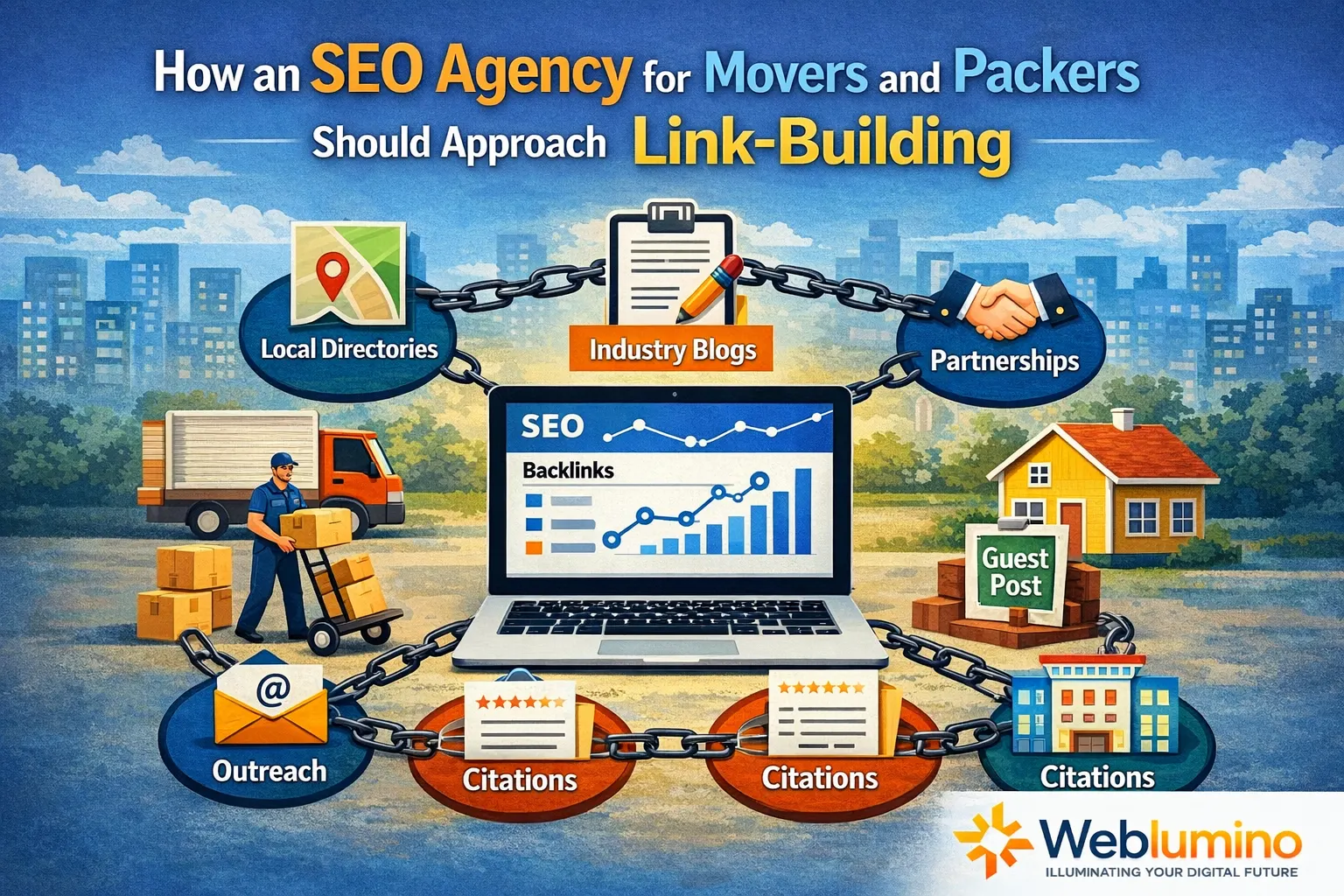
It’s pretty much always a busy field if you’re in the moving business. It doesn’t matter if you’re a removal company in Auckland, you manage a lot of moving trucks throughout Australia, or you’re just working in a very specific area; what gets you onto the first page of Google instead of the third frequently hinges on how good and relevant your backlinks are.
Link-building is not a side task you hand off and forget. For a dedicated SEO agency for movers and packers, it is a core strategy that requires industry knowledge, geographic targeting, and a disciplined approach to earning links that actually move rankings.
This set of instructions will give a very detailed, no-nonsense explanation of exactly how to achieve that.
Why Link-Building Is Different for the Moving Industry
Because people are moving to a very specific place and at certain times of year, and because you need to trust the company doing the moving, the SEO (Search Engine Optimisation) for movers and removals is a bit different from most. A link from a general blog about life in general won’t help much. Instead, it’s how relevant the links are: links from websites about selling or renting property, guides for people who are relocating, lists of local businesses, and sites all about particular towns or cities – those are what tell Google both what your business is about and where it is.
If you’re a moving company in Auckland looking to improve your search ranking, or if you’re a removal company in New Zealand doing SEO across the whole country, your links need to show you’re a local expert. Google’s system for local searches really cares about how much a website is connected to other businesses and resources in its area and field.
The Foundations: What a Good Link Profile Looks Like
Before any outreach begins, an experienced SEO agency for movers and packers should audit the existing link profile. This means reviewing:
- Domain authority of linking sites — low-quality links can actively harm rankings
- Anchor text distribution — over-optimised anchors are a red flag to Google
- Link velocity — a sudden spike in backlinks looks unnatural and triggers scrutiny
- Topical relevance — are the linking sites connected to moving, real estate, or local services?
Once a baseline is established, link acquisition can be planned with clear targets and timelines. Rushing this process is one of the most common mistakes moving companies make when hiring agencies that lack niche experience.
6 Proven Link-Building Tactics for Movers and Packers
1. Local Citations and Business Directories
To begin with any SEO work for removalists (people who help you move), your business’s name, address and phone number need to be the same on important online directories. In Australia and New Zealand, that means on sites such as Yellow Pages, NoCowboys, Localist, Neighbourly, Google Business Profile and Apple Maps.
These aren’t simply mentions of your business; they are the basic things that build confidence in the search engines. If your name, address or phone number are shown differently in places online, it makes it harder for search engines to understand where you are and will lower your place in local search results. A good SEO company will check all your current entries and fix anything wrong before they start to add details to new sites.
2. Real Estate and Relocation Partnerships
People who are moving, and the people helping them with their real estate (selling, buying, managing) deal with each other at the same time. So a link on a real estate company’s website, a mortgage broker’s blog, or a property manager’s site is very relevant. You get these kinds of partnerships by actively contacting people, not by paying for them, and they show that you really know others in the business.
If you’re a moving company in Australia and you’re trying to get a higher ranking in search results (SEO), getting links from blogs of real estate organisations, guides to different suburbs, or websites of local buyer’s agents will really help your site’s authority…and it will be helpful in the correct area.
3. Guest Posting on Hyper-Local and Industry Blogs
Guest posting can still be effective, yet it needs to be done well. Look for sites that focus on the area you’re in, specifically lifestyle publications, ones about homes and interiors, and resources for the moving industry. Your article should really teach people things – things like what to pack, how to move between states, or how to move with kids, or with a dog or a cat.
When deciding where to post, how closely a site’s subject matter fits your topic is more important than just how ‘powerful’ the website is in general. For a New Zealand removals business and its SEO, a site with a Domain Authority (DA) of 30, but one all about housing in Auckland, will be far more useful than a DA 50 lifestyle blog that doesn’t have any connection to a particular location.
4. Resource Page and Broken Link Building
Loads of council websites, community noticeboards and guides to suburbs (or cities) have pages for people who are moving to the area, and they include links to local businesses. Getting on those pages is a really quick win for moving companies – if you can find them and contact the site to be listed. Broken link building is a step on from this: you locate pages listing resources where a moving firm used to be linked, but isn’t anymore, and then suggest your client as a replacement. This is especially successful in Australia and New Zealand, because local businesses change over fairly often, so chances to do this happen frequently.
5. Digital PR and Local Media Coverage
Getting your moving company named in a city or area newspaper gets you a really good link to your website; it’s the kind of link you can’t just pay for. To get these links through publicity, moving companies can publish new information like how much it usually costs to move to different cities, when most people move, and how many people are moving between states, then offer those stories to journalists who write about housing, the economy, or what’s happening in the local area.
This works brilliantly for businesses that want to be found by people in Australia searching for the top SEO company for movers. When you show you’re an expert in your field and say it publicly, you get links to your site, and people start to trust your brand at the same time.
6. Supplier and Partner Link Exchanges
Packaging suppliers, storage facilities, insurance providers, and cleaning services all work alongside moving companies. A natural link between your site and a complementary local business creates genuine topical context. These are not reciprocal link schemes — they are honest cross-referrals between businesses that genuinely serve the same customer base.
What to Avoid: Link-Building Red Flags
Not all link-building is created equal. A quality SEO agency for movers and packers should actively protect clients from tactics that carry algorithmic or manual penalty risk:
- Private Blog Networks (PBNs) — Google has become highly effective at identifying and devaluing these
- Paid links without disclosure — buying links violates Google’s guidelines and creates long-term liability
- Irrelevant mass outreach — hundreds of links from unrelated websites dilute topical authority rather than building it
- Keyword-stuffed anchor text — exact-match anchors on every backlink look manipulative; natural anchor variety is essential
Any agency promising 100 backlinks in 30 days for a flat fee is selling risk, not results. Sustainable link acquisition for moving companies takes three to six months to gain meaningful traction.
How an SEO-Friendly Website for Removalists Supports Link-Building
Links drive traffic to your site, but the site itself must be built to convert and to earn links organically. An SEO-friendly website for removalists should include:
- Dedicated location pages for every service area with unique, substantial content
- A blog with genuinely useful moving guides that other sites will naturally reference
- Clear service descriptions with schema markup for local businesses
- Fast load times and mobile optimisation to reduce bounce rates
- Trust signals: verified reviews, accreditations, and association memberships
The best links in the world will not compensate for a slow, thin, or technically broken website. Link-building and on-page SEO must operate in parallel.
Measuring Link-Building Success
A credible agency providing SEO services for small businesses in the moving sector should report on more than just the number of links acquired. Meaningful metrics include:
- Domain Rating (DR) or Domain Authority (DA) growth over time
- Organic keyword ranking improvements for target terms
- Referral traffic from acquired backlinks
- Local pack visibility improvements in Google Maps
- Lead volume and cost per lead from organic search
Monthly reporting that connects link acquisition to actual business outcomes is the standard you should expect. If an agency can only report link counts, that is an accountability gap.
Link-Building in the Age of AI Search
Because Google’s search results around the world are now showing things created by AI, lots of people are asking if links to websites are still important. And as far as we can tell, they are, but which links are more important than they used to be?
AI summaries and search results that are written by AI still get most of their information from sources that are respected and have many links to them. A furniture moving business that really knows its subject and has a nice, tidy collection of links pointing to it will have a better chance of being suggested by Google’s AI for local services. Therefore, getting good backlinks that are specifically about your area of expertise is a lasting benefit for your business, not just a trick for climbing up the rankings.
Frequently Asked Questions
Q: How long does link-building take to show results for a moving company?
Typically between 3–6 months after a consistent campaign begins. Highly competitive markets like Sydney, Melbourne, or Auckland may take longer. Link-building is compounding, results accelerate as domain authority grows.
Q: How many backlinks does a removalist website need to rank on page one?
There is no fixed number. Analyse the backlink profiles of top-ranking moving companies in your target city using Ahrefs or Moz. That gives a realistic benchmark rather than an arbitrary target.
Q: Is removalist SEO in New Zealand different from Australia?
The core principles are the same, but market scale and competition differ. New Zealand, particularly Auckland, has fewer competitors, so a well-executed removalist SEO New Zealand strategy can achieve strong rankings faster. Australian metro markets typically require a longer, more sustained effort.
Q: Can a small moving business afford professional link-building?
Yes. Many SEO services for small businesses offer modular packages. Starting with local citations, Google Business Profile optimisation, and two to four quality guest posts per month is a cost-effective entry point that delivers measurable results.
Q: What is the difference between a citation and a backlink?
A citation is a mention of your business name, address, and phone number, it may or may not include a clickable link. A backlink is a hyperlink from another site pointing to yours. Both matter for local SEO, but backlinks from authoritative, relevant sites carry significantly more weight for organic ranking.
Q: Should a moving company build links themselves or hire an agency?
Outreach-based link-building is time-intensive and requires knowing which sites are worth targeting. For a moving company owner focused on operations, hiring a dedicated SEO agency for movers and packers is almost always more efficient, provided the agency has genuine moving industry experience.
Q: What is the biggest link-building trend for moving companies right now?
Digital PR has become the highest-ROI tactic for local service businesses in 2024–2025. Publishing original research, average moving costs between cities, migration patterns, and peak moving seasons attracts editorial coverage from news outlets and industry publications. These links carry far more authority than directories and are much harder for competitors to replicate.
Q: Does social media help with link-building for removalists?
Indirectly, yes. A strong social presence increases content visibility, which increases the likelihood that bloggers, journalists, or local websites will reference and link to your content. Social signals are not a direct ranking factor, but the amplification effect makes your linkable content far easier to discover.